
Buying
Assortment Logic: Knives and Tableware as One Range
2026-11-04
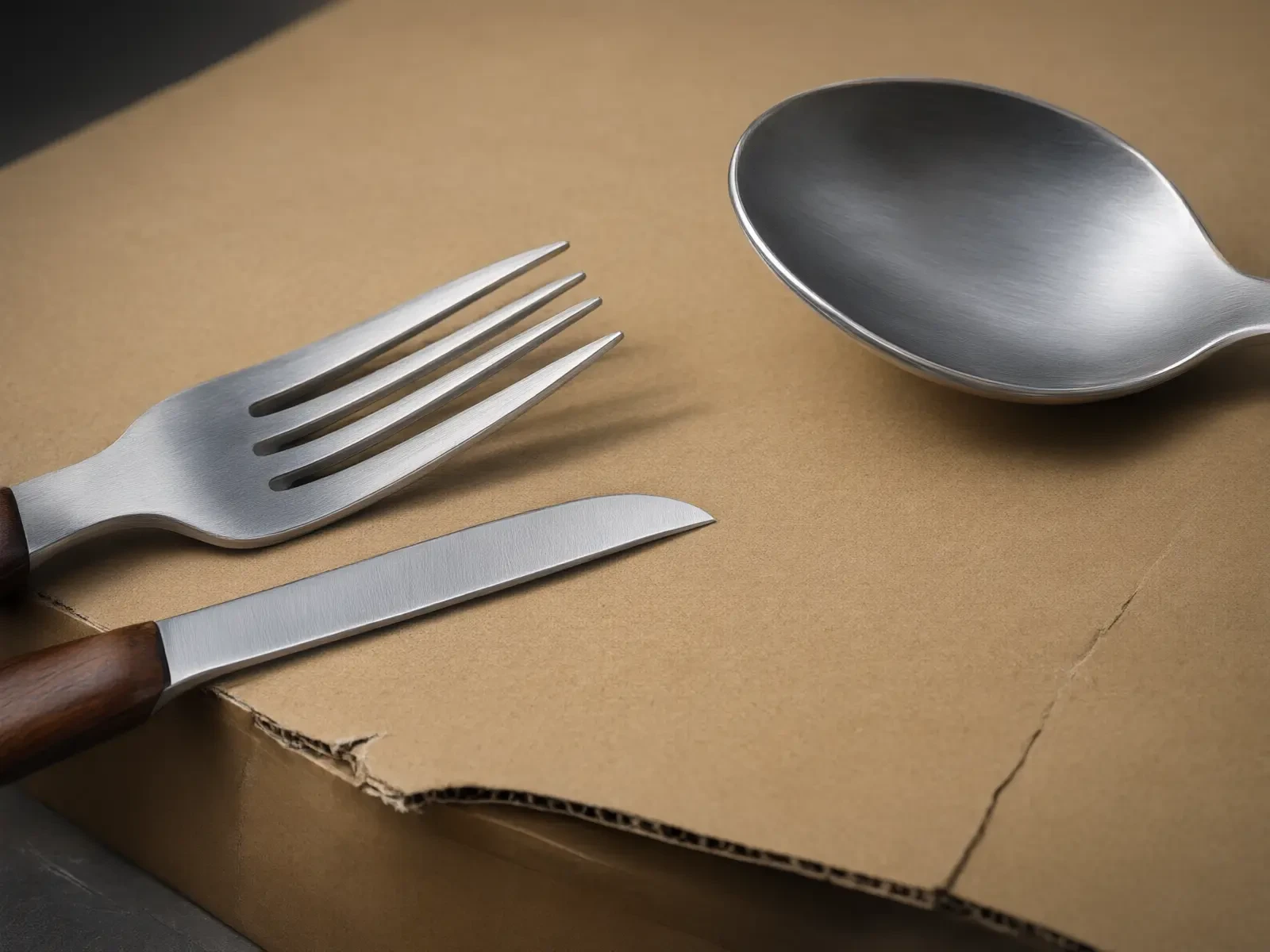
Why cutlery ranges fail on composition rather than quality, and how knives, tableware and packing can be planned from one supply source.
A retail buyer assembling a cutlery category rarely fails on product quality. The category fails on composition. Six knife SKUs from one factory, four tableware items from a second, serving pieces from a third, and the shelf ends up with three different handle finishes, three packing standards and three reorder cycles. The buyer's cost is not in the unit price. It sits in the coordination work that follows.
We manufacture kitchen knives and tableware in the same facility, which makes assortment planning a factory question rather than a trading question. The logic below is the one we use with distributors and retail buyers when they build a category from a single supply source.
Begin with the shelf, not with the product list
Assortment planning starts with the planogram, the fixed drawing of how a retail shelf is divided. A cutlery bay on a mid-market shelf typically runs 1.2 to 1.8 metres and carries three functions: cutting, serving and eating. Each function occupies a block, and each block has a price ladder from entry to premium. The number of SKUs a block can hold is a physical constraint, not a preference.
Working from the planogram changes the selection sequence. Instead of asking which knives are popular, the buyer asks how many facing positions exist per block and what price band each position must cover. A block with four facings and three price bands needs four SKUs, one of which repeats a band with a different blade length. That answer is available before any sample is opened, and it keeps the range from drifting into overlap.
For distributors selling through cross-border catalogues, the same principle applies in pages rather than centimetres. A catalogue spread carries a fixed number of items, and the mix has to read as a family. Composition decisions come first; item selection follows.
The knife block anchors the range; tableware completes the basket
Knives carry the margin and the identity of the category. A buyer will usually commit to a knife series first, because blade shape and handle material define what the shelf looks like from two metres away. Tableware and accessories do different work: they raise the average basket value and give the buyer a reason to return to the same supplier for the second and third order.
In practice, we see three working ratios across retail formats. A compact shelf devotes roughly two thirds of its facings to knives and one third to tableware and accessories. A full cutlery bay moves toward an even split. A catalogue assortment usually keeps knives dominant in page count but places serving pieces and accessories adjacent to the knife spread, so the reader moves from blade to table in one visual step.
The ratio matters less than the rule behind it: every tableware item in the range should have a clear companion in the knife block. Serving spoons next to carving knives, steak accessories next to steak knives, utensil sets next to the block-set line. Items that cannot be paired this way tend to sit on the shelf as isolated SKUs.
Consistency across materials and finishes
The most common defect in a mixed assortment is visual: a satin-finished blade beside a mirror-polished serving piece, or a dark wood handle next to a pale one. At shelf distance the mismatch reads as two suppliers, even when the buyer intended one family.
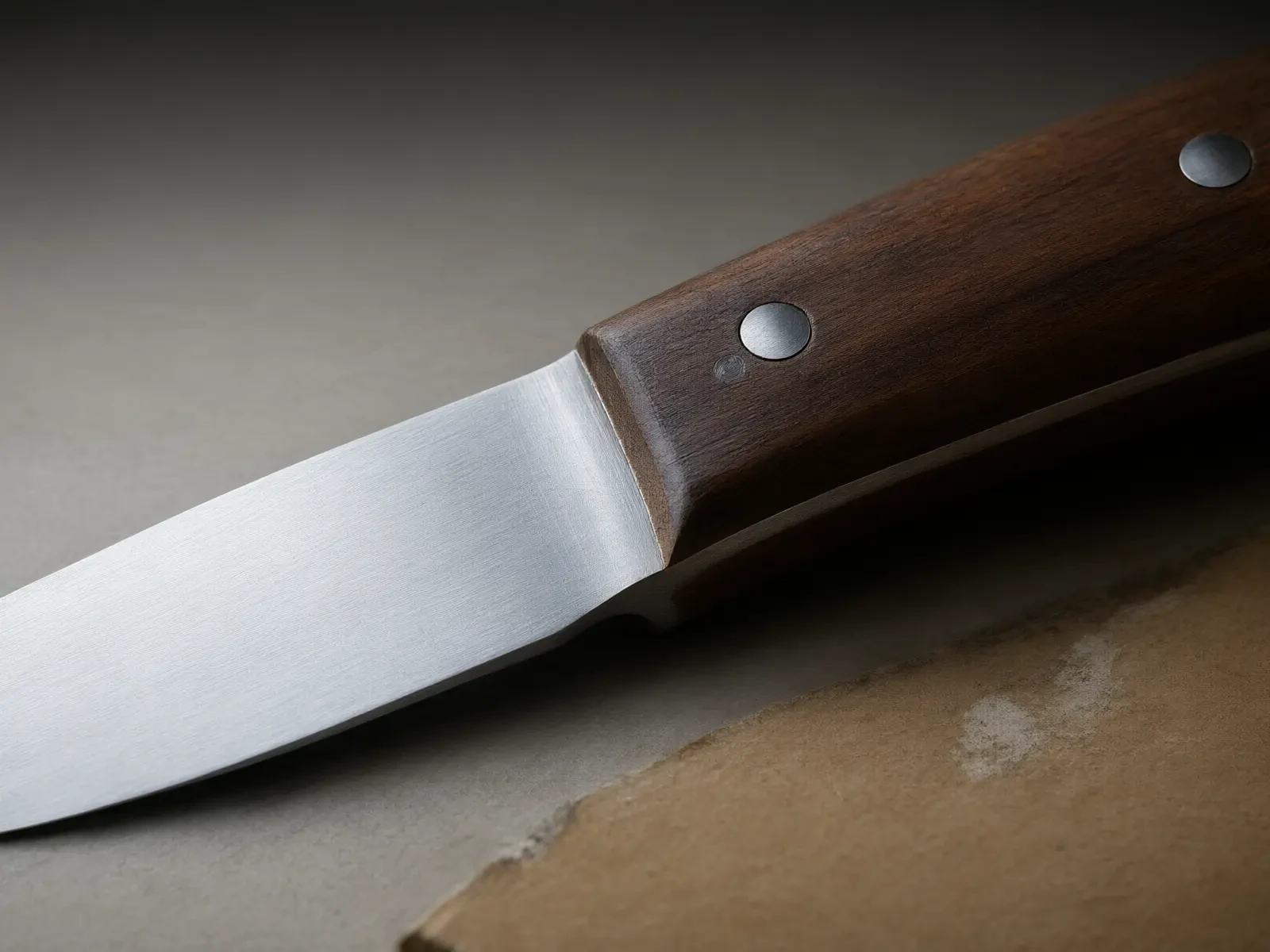
Because blanks, grinding, handle assembly and final inspection stay in the same factory, finish can be specified once and applied across categories. Stainless strip and layered steel are selected per series and checked for hardness before grinding begins, so the steel family behind a knife line can be carried into the tableware specification. Handle scales are aligned, riveted and sanded flush with the tang, and wood handles are oiled twice before packing. When a tableware handle is specified against the same reference sample, the two categories leave the factory with a shared surface language instead of an approximate match.
Blade geometry is set on the same line for a whole batch, which keeps the taper consistent between pieces. That consistency is what allows a buyer to describe the range to a retail partner in one sentence rather than four.
Packing and case configuration decide the landed cost
Assortment work continues after the product is chosen. Case packs, inner cartons and shelf-ready presentation affect how the range behaves in a warehouse and on the floor. A knife set packed in a gift box and a serving piece packed in a poly bag cannot share a logistics profile, and the difference shows up in handling time per unit.
Our approach is to fix packing architecture at the same time as the assortment. Blister, boxed and open-stock formats are planned per SKU, and buyer marking, blade etching and packaging artwork are handled in-house on volume orders. That means a distributor's own label can appear on the knife block, the tableware carton and the outer case under one artwork approval, rather than three separate ones with three sets of tolerances.
Case configuration also sets the reorder rhythm. When knives and tableware ship on a shared case plan, a replenishment order can be built as a single shipment instead of a mixed container assembled from separate factories.
Catalogue and reorder discipline
A one-stop range only holds together if the documentation matches the goods. Cross-border catalogue buyers need consistent naming, consistent photography and consistent specification sheets across categories. A buyer comparing a carving knife and a serving fork should see the same fields in the same order.
We keep series naming and specification structure aligned across kitchen knives, tableware and accessories, and support catalogue material in English, German, French, Spanish and Japanese. That set covers the markets where our distributors most often resell into retail.
What a single-source range actually saves
The saving is not a headline discount. It is the removal of duplicate work: one finish approval, one artwork approval, one case plan, one reorder conversation, one quality reference. For a distributor carrying forty SKUs across three categories, the coordination layer is where margin quietly disappears.
We build ranges this way because the factory floor allows it. Blanks, grinding, handle fitting and inspection stay under one roof, so a change request reaches the people who make the blade rather than a trading desk. Buyers who want to test the logic can send their shelf plan or catalogue spread and the categories they carry; we return a matching range proposal with packing details for their market.